
Farm News What’s in the Storage Share
U-Pick
Nuts and Bolts Recipes
Remember to bring bags and/or boxes (unless you ordered pre-bagged)
and guess the weight of the Blue Hubbard Squash!
Pickup is
This Thursday Nov. 20th from 10am — 6pm
AND
This Friday Nov. 21st from
9am — 12 Noon.
Pre-Bag Storage Shares are for pickup anytime we’re open Thursday or Friday.
Winter Store Dates Dec. 18, Jan 15 and Feb 19 — 10am -6pm — and all pre-ordered/pre-bagged. Mark your calendar and See nuts and Bolts for details.
Farm News
Greetings Friends!
We’ve been busy since we last saw you! We finished harvesting most things over a month ago – the roots especially, before they got rained on, so we got to pick them out of dry soil. And it was 80 degrees! Normally we wait til it’s cooler but the 2.75″ rain in late September had caused some splitting so we had to get them out of there before anymore got icky. We’re always grateful for a dry enough root harvest though! It went smoothly and yields were pretty good. This was the 5th October in a row with above average temps — the ongoing warmth causes its own challenges but is also more comfortable for sure, for all the picking, washing, field clean up and tractor work that we do in October.
We planted garlic and picked the last of the parnsips just last week. It’s late to plant garlic but the soil has been so warm still from the warm weather, it has already started to set roots. Hopefully this week we’ll mulch them and strawberries with straw — from our friend Brian Lips in Nerstrand. Brian and Tammy (BT Farms) supply grain to Loon Liquors for distilling. We use wheat or barley straw for mulch, and the grain from the same fields / plants is used to make many of Loon’s excellent spirits. Most or all of Loon’s ingredients are certified organic, and over 90% of Loon’s ingredients, by weight, come from BT Farms. Also, wheat that Brian and Tami grow is ground onsite at Loon’s new tasting room/pizzeria for their delicious pizzas!
Once upon a time, Simeon Rossi, now co-founder and flavor genius of Loon Liquors, worked a season or so here with us. He has kept in touch, sometimes using our herbs for flavoring drinks, and from Little Hill Berry Farm too. This fall when the pizza oven started cranking we supplied them with basil as long as we had it, and some tomatoes too. We’re sure their partnership with local organic farms goes further than what we know, but when we roll out the straw bales for mulching we enjoy thinking about the connections we do know about!
According to our records it hadn’t rained here in over a month, so it’s nice to get something today to add at least a little moisture going into winter. And we know not everybody does, but we were celebrating when we had a flurry of white flakes this morning!
In the last few weeks we also took down tomato trellises, picked up all the last irrigation, planted some cover crops, cleaned the garlic to eat this year and popped apart the garlic for planting, picked the herbs, spinach and kale — and after this week we will be mostly back inside washing, answering emails and starting to wrap up the year’s bookkeeping, placing the seed order and a few outdoor maintenance projects. There is still a tiny bit of winter rye cover crop to plant (after the upgrades to the planter are finished), painting a couple rusty old implements, maybe a digging / erosion control project, etc — but if we do really get a dump of snow next week we’ll set that aside and go play! After we plow the driveway of course.
We continue to be fortunate to work with a great crew, who keep smiling and laughing and inspiring us, and this week they are busy bagging up carrots and all the pre-bag orders, cleaning the barn and organizing it for the pickups. 3 of us needed stitches for work accidents this year! We’ve only had 3 other stitches needs over the years, and overall Ben was two of them so that doesn’t really count. Know that there is lots of blood, sweat, tears and laughter that goes into growing your food (metaphorically of course!), whether it’s from this farm or any other farm anywhere. You all are an outstanding customer base so it feels silly to remind you, but we can’t miss a chance to give thanks for farmers and the land!
Other than washing veggies, we’re expecting a full but quiet winter. Lots of office work getting ready for next planting season, plus gathering and stacking firewood, and getting through the list of fixes, maintenance and upgrades on all the machines by March — well before they’re due to report for duty again.
We hope you find it satisfying and rewarding to cook and eat these hearty foods, and continue to support the farm. Although the regular season share is the mainstay of the farm’s financial stability, and for many of you, the mainstay of your summer produce supply, we hope the storage share is a valuable part of our role in providing food for the community — and will continue to be for years to come. We love eating and providing the same quality and flavor – and COLOR! — of local organic veggies all throughout the fall and winter. Not everybody gets as excited about the sweet heartiness of fall food as they do about the juicy fruits of summer, so we appreciate your passion for good farm food extending into the frozen months.
As usual we’ll be happy to answer any questions, concerns or feedback you may have about all this produce. We hope this week’s farm goodies warm your houses, tables and tummies with their health-giving nourishment!
And we hope you have a great winter, eating and being well. The first winter store will be Thursday, December 18th from 10-6 pm, and all pre-ordered and pre-bagged like the last few years. More details below. If you can’t make it during those hours, no problem, we can set things aside for later pickup, see below for more details on that too. If we store any roots for you from the storage share, the winter store is the time to pick them up. Just email us beforehand so we know to put them out.
Once again, THANK YOU SO, SO MUCH for your support this year!!
What’s in the original Storage Share?
For details about picking up your customizable order, see further below.
For the original Storage Share you can follow the signs in the barn, with these amounts.
Carrots — 20 lbs — Sweet and juicy, definitely the best carrots of the year. They’ll be in two separate, ten-pound bags. The bags are perforated with holes and work great for long-term storage– and even say our farm name on them! Easy Storage Tip : Fridge. We can store some of them for you, see “nuts and bolts” for details.
Potatoes — 10 lbs — Our friends at Driftless Organics near Viroqua, WI do a great job growing potatoes, so we buy these in from them. As usual they are in 2 separate, 5 lb bags, and you can again choose from their Yellows and Reds. Their paper bags (with a mesh vent) work well for storage. Easy Storage Tip: Dark, cooler than room temp, but not in fridge.
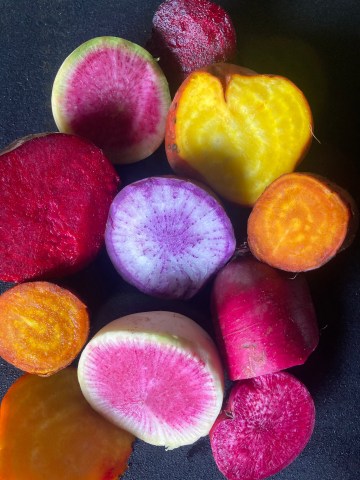
Mixed Roots — 10 lbs — You get to mix and match a bag of red beets, golden beets, parsnips, celeriac, watermelon radishes, purple daikons, more carrots, and maybe another surprise or two. We’ll have those same perforated bags you can put the roots in for long-term storage. Easy Storage Tip: Fridge. We can store some of these for you too –see “nuts and bolts” for details.
Winter Squash — 5 — Butternut, plus a smattering of carnival, starry night acorn, tetsukabuto, Blue Hubbard and wintersweet. All are good. Butternut and tetsukabuto will keep the longest, til January or February. For the other varieties it’s safest to eat them by new year’s. Easy Storage Tip: Countertop or tabletop, but for longest storage put a few in the basement or cool closet. Check them periodically, so you catch any soft spot before it turns the whole squash rotten (you can cut out a small rotten spot before cooking and the rest is usually fine). The flesh freezes well too, once roasted or cubed and boiled.
Brussels Sprouts — 2 stalks — We leave them on the stalk since it takes so much labor to cut them off (and maybe it’s interesting for you to see how they grow)–thank you for dealing with the stalk! Easy Storage Tip: Fridge. They do well in a plastic bag on or off the stalk, for 1-2 weeks.
Cabbage — 2 heads — Green, small heads.. As usual these had to be picked a while ago and had a few leaves peeled this week, but still have plenty of life left in them. Easy Storage Tip: Fridge.
Onions — 5 lbs — Easy Storage Tip: Basement or hanging basket.
Leeks — 4 each— are big and beautiful, it’s nice to have them back after a crop failure in 2024. Think of leeks like mild, glamorous onions. Our favorite use is in quiche, with red peppers and spinach or kale (fresh or frozen.) Leeks also freeze well, chopped raw in a bag, they can keep a month or two but then may start losing flavor. Easy Storage Tip: Fridge.
Garlic — 4 heads– These should store until January or even February. Easy Storage Tip: Countertop or hanging basket.
Sweet Potatoes — 3 pounds — We’ll have them clean and dirty, your choice. The clean ones are reliably good for two to three weeks. The dirty ones will store longer, maybe 1-2 months. Easy Storage Tip: Basement, 60°, if it’s not 60 then eat within one month.
Kale — 1 clear bag — It is mild and yummy. We picked this a couple weeks ago and have kept it in the moist root cellar.
Spinach – 1 clear bag–The sweetest spinach of the year! The frosts made it amazing. A crop we’ve struggled with since our favorite variety was discontinued a few years ago — a seed rep said “yeah there aren’t enough reliable spinach varieties for organic farms right now.”
Dried Herbs — 1 Bunch—We had less herbs left in the field this year, so we are doing 1 bigger bunch per share with oregano, thyme and sage in each bunch. There are some scraps to pick in the field though if you want to U-pick some.
Easy Storage Tip for entire share: Keep about half of everything in your fridge for eating all winter and then have a soup-making day with the rest of the share and freeze soup to enjoy all winter. You can also roast squash in halves and then freeze the flesh in bags. There are a lot of soup recipes in recipes section below, along with copies of more detailed storage info available. And you can leave some of the roots with us to pick up at our winter store in December or later.
Customizable Orders
We have a printed order sheet for everyone with your order, and you can “shop” from that list. Like last year, we are pre-bagging all carrot orders of 10 lb or more: otherwise you will weigh the items that need to be weighed, we will have scales available.
Don’t follow the signs , which are for the regular full storage share — just follow your own list of items you ordered and paid for.
Please pay while you are here, if you haven’t paid yet. Erin will not be emailing you with your order totals unless you ask. She will be giving everyone their shopping list with the amount owed when you get here.
You can pay via cash, check, or Venmo. For venmo fees, please add $4, and use “@openhands-24”.
If you haven’t paid yet your total will be at the top of your order sheet and please pay while you are here. We like to have all the Storage Share payments taken care of by Thanksgiving.
Thanks and let us know how it goes!
What’s for U-Pick?
For herbs, there is a very small amount of thyme, sage, and oregano.
We will be opening up Spinach, Kale, and Collards for u-pick this weekend after the Storage Share. Come anytime to u-pick! The spinach is east of the driveway, past the solar panels, toward Hwy 3. The kale and collards are in the field down the hill past the greenhouse (where basil was). These crops will be open for u-pick until a deep freeze. If you are ever wondering if they are still open, you can always email us before coming out.
Spinach! It is super yummy. Highly recommend. It’s gleaning but not hard. We will have picked everything we can justify the time for; there will be smaller leaves and maybe some bigger leaves interspersed with yellow leaves gone by. Bring a bag. and Scissors and/or a small knife will be best.
Kale — It’s beautiful and yummy! You can, literally, take every single last leaf — we mow the stalks for disease prevention before the snow gets too deep. Just snap leaves off the main stem. And if you want, snap or cut the tippy-top “floret” or “bouquet” of smallest leaves.
Collard Greens — In the same place as the kale, down the hill past the greenhouse. Like with kale, just snap leaves off the main stem.
Nuts and Bolts
If you can’t make it this Thursday or Friday please email, and we’ll make arrangements to get you your share at a later date.
Pre-bags Pickup – can pickup anytime we’re open Thursday or Friday.
WINTER STORE — THURSDAYS — Dec 18, Jan 15 and Feb 19, 10am – 6 pm. All pre-ordered and pre-bagged, and on THURSDAYS. Ordering will again be on a google form, and we’ll set your pre-bagged order on a table in the barn for you to come in and get. You’ll get the link to the form in a reminder email the week before. February store is tentative, but looks likely.
In December we expect a good selection –Kale, carrots, beets, parsnips, radishes, celeriac, plus brussels sprouts, onions, and maybe spinach and seconds garlic. We will send out a reminder email. If you got this in an email you will get that reminder. The winter store is open to anyone — If you have family or friends who might be interested, you can forward them the order form link or have them email us and we’ll get them on the reminder/pre-order list. If you can’t make it on those days, you can pre-order and we’ll set it aside for you to pickup when you can.
If you’d like us to store carrots or mixed roots for you we can. Give one of us your bags or a partial bag, and we’ll put your name on it to store in the root cellar for you. You can then pick up your bag at one of the Thursday winter stores —to pick up your bag, please email us by noon on the Wednesday before (ie Dec 17 or Jan 14. That way we can set it out with pre-orders and you can come anytime from 10-6 on Dec 18th or Jan 15th. For example and most likely, you give us 1 of your 2, 10 lb carrot bags, and maybe put a few of the mixed roots in the bag, and we’ll set it out for you when you let us know you’re coming. Remember that our root cellar is too cold for potatoes, squash, sweet potatoes and onions — this will only work for carrots, beets, parsnips, radishes etc (most crops on the “mixed root” table.)
Guess the Blue Hubbard! We just love doing this, so we’ve saved out the biggest one of the year and it will go to the closest guess. We have no poker face, so we won’t be weighing it until after everyone guesses! It will be on the sign-in table, a bumpy blue-grey dinosaur-looking-squash, and we’ll provide a few recipes to go with it. It makes an awesome harvest feast.
Bring a Sturdy Box — If you like, a box or tote or two may be the best way to carry this share to your car. It’s a lot of food, and heavy. Much of it is already bagged for you, but it is several bags, plus the loose crops. We’ll have a few paper bags but if you have some please bring those too. We do have a few small wagons and carts for you to use. We can help you carry or roll it to your car if you like, feel free to ask.
Storage Details are below.
Storage Share Pickup Hours — THIS THURSDAY AND FRIDAY, November 20, 10:00-6:00pm AND Friday November 21, 9-12 Noon. Email if you can’t make it and we’ll make arrangements with you.
Please Drive Carefully — Children can be anywhere.
Thank you!
Your farmers,
Erin and Ben, with Allia, Alex, Camille, Maura, River and Soli
Storing the Harvest
General Tips:
–Sort as you eat, and check on things at least every couple of weeks. One bad “apple” can spoil the lot, so remove the ones that are going soft and use them first.
— Remove bad spots with a knife (including green spots on potatoes.)
–None of these crops like to freeze, so if you have anything on a porch or unheated place, remember to monitor with a thermometer and protect them!
— Many of them can, however, be prepped, cooked, and frozen. If you have something going bad, but can’t eat it all right away, see the recipes and freezing tips.
–If you’re having trouble storing any of the veggies, we’re happy to troubleshoot with you, so feel free to call or email at any point. We want this to be a satisfying eating arrangement!
Storage Needs at a Glance
| In the Fridge? | Bag? | |
| Roots — Carrots, Beets Parsnips, Radishes | yes | yes plastic |
| Cabbage+Kale | yes | yes plastic |
| Leeks | yes | yes plastic |
| Brussels sprouts | yes | yes plastic |
| Potatoes | no | yes paper |
| Winter Squash | no | no |
| Onions | no | no |
| Garlic | no | no bag, or yes paper |
| Sweet Potatoes | no | no |
| Dried Herbs | no | no |
Storage Details
We don’t usually use charts like this because the vegetable world isn’t that simple, but it’s a start. For some of the more nuanced details:
Roots –Carrots, Beets, Celeriac, etc
Best to store dry, in a bag. If too moist they will sprout or mold. If kept out of the bag, they will begin to go flacid and lose flavor. You’ll notice the bags for the roots have vent holes—these should keep the moisture level just right. The roots should keep into January in these conditions.
Carrots like to be at a steady 34°. If you know the coldest part of your fridge, put them there. The peels will start to dry out a little, but as long as there is some moisture in the bag they should be fine. If the carrots taste at all bitter after a few weeks, try peeling them—the bitterness is usually just in the peel and can increase with storage time.
Remember that apples can make carrots bitter, so either store one of them in a crisper drawer, or outside the fridge.
The other roots—beets, celeriac, radishes, parsnips–are happy in the fridge, or anyplace below 40° and above freezing.
Cabbage + Kale—Cabbage can keep a couple months in the fridge, in a plastic bag. We find a loosely closed plastic bag keeps the right amount of moisture in. It likes to breathe a little bit. Peel off any outer leaves that go soft or moldy, and the inside will usually still be great. The kale will last a couple weeks if kept tight in a plastic bag or box.
Leeks—Can keep a month in the fridge. Best kept loosely in a plastic bag. When you want to use part but not all of a leek, simply chop off the part you want, and return the rest to the bag. The green tops are also great in stock or some soups.
Brussels sprouts—The flavor is best in the first week or two, but they will probably keep 3-4 weeks. You can throw the whole stalk in the fridge or pop the sprouts off and put in a bag.
Potatoes— Potatoes need darkness.
Ideal storage is around 50° and mildly humid. A pantry or cool spot in the basement should work. If you’ll eat them within a few weeks, a kitchen cupboard will be fine. The bag they’re in is vented and they can stay in it for a long time. Cover with a blanket or cloth to keep light out but allow ventilation.
Winter squash—Ideal storage is 50-55°, dry, and ventilated. We like to pile them up on the kitchen counter because they’re so pretty. They keep well there for a few weeks, but they keep better in a cooler part of the house, such as the basement or cool corner upstairs (as long as it isn’t humid.) The best butternut squash with no soft spots can store into February. Most of ours will keep until New Year’s, but start eating them now, watch them closely and eat them before they go bad. Don’t expect the pie pumpkins or ambercup to last more than a couple weeks. The other varieties should last to February easily. If you find a brown or soft spot in any of them, you can usually cut around it and use the rest of the squash.
Onions + Garlic —These should keep well into January, or longer. Room temp. or cooler, dry air, well-ventilated. For longest storage, darkness helps too.
Sweet Potatoes—Just in case you don’t use them right away, they can last through January if kept around 55° or a little higher. Do not put in fridge.
Dried Herbs—Two common ways are to hang the bunches from a string or in a hanging basket in the kitchen, or put the usable part in jars. Either way, keep out of direct sunlight and enjoy!
Alternatives to your refrigerator:
The crops that need fridge space will take up about one tall shelf, and the other crops can be kept in various places around the kitchen or house, depending on their needs. If the cold-needing items won’t fit in your fridge, there are a few options. First, refer to the freezing section in the newsletter. This other storage method will require a little more thinking and monitoring to work well. Unheated garages, porches, mudrooms, etc are possible alternatives if you pay regular attention to them during changes in weather. For any of these:
Get the veggies very cool—fridge temp—by leaving them uncovered on a cold night.
Pile them tightly together and wrap tightly in blankets or an insulating material.
Place a thermometer next to the veggies and check it in the early morning.
Touch them with your hand to gauge their actual temperature. Cold enough? Too warm?
The vegetables’ thermal mass will hold a temperature pretty well. In warm weather, covering them can help keep them cool. If they warm up during the day, uncover them, and maybe open a window to let them cool off during the night. Then re-wrap to keep them cool the next day.
In deep, long freezes it will probably be time to excavate a part of the fridge to find a home for the remaining veggies, or process and put them in the freezer.
Above all, EAT and BE MERRY!!
Recipes
Here are a bunch of recipes for happy eating all winter long!
Roasted Sweet Potatoes and Apples from http://www.askchefdennis.com
- 4 large sweet potatoes – peeled and sliced
- 3 large apples – peeled and sliced
- 1 small onion – large chop
- Sea Salt to taste
- Black Pepper to taste
- 1 tbsp brown sugar
- 1 tsp cinnamon
- olive oil
- Peel and cut sweet potatoes into medium-sized chunks, coat with olive oil and season with salt and pepper add onion chunks and place on a cookie sheet in a 350-degree oven for 15 minutes before adding apples.
- Peel and cut apples into medium-sized chunks, coat with brown sugar and cinnamon and place on a cookie sheet with sweet potatoes after they have cooked 15 minutes and cook for an additional 15 minutes.
- remove from oven and mix both together, place on a serving platter and sprinkle with chopped parsley.
Apple Beet Compote from http://www.askchefdennis.com
- 3 red beets
- 3 golden beets
- 1 fennel bulb
- 2 large apples
- 1/4 cup walnuts
- 1/4 cup brown sugar
- 1/2 tsp cinnamon
- 3 tbsp unsalted butter
- sea salt and black pepper to taste
- preheat oven to 375 degrees
- clean and peel beets then cut into small chunks
- mix each color separately with olive oil, sea salt and pepper, and place into roasting pan.
- cut fennel bulb into the same size pieces and coat with olive oil, salt and pepper, then place in roasting pan with beets.
- Place the roasting pan into the preheated oven and bake for 30-40 minutes, or until beets are soft*
- While beets are roasting, peel and cut the apples into bite-size pieces and place them in a saute pan with 2 tbsp of butter and 2 tbsp of brown sugar, and cinnamon.
- Saute apples for 5 minutes just to soften them up some, set aside.
- In another saute pan add one tbsp of butter and 2 tbsp of brown sugar and mix well.
- Add the walnuts and over medium heat. coat the walnuts with the brown sugar mixture* tossing to get them completely coated.
- remove the walnuts from the pan and place them on parchment or a plate to allow the sugar to set.
- When the beets are done, gently mix your compote together and serve warm.
Cabbage Slaw with Miso-Honey Vinaigrette
from Food52
Ingredients
- 1/4 purple cabbage
- 1/4 green cabbage
- 1 medium carrot, peeled
- 1- 2 small daikon radishes, peeled
- 4 green onions
Dressing 1 tablespoon white miso paste 1 teaspoon fresh grated ginger 1 clove garlic 1 tablespoon peanut oil tablespoon toasted sesame oil 1 teaspoon sweet mirin vinegar 1 teaspoon rice wine vinegar 1 teaspoon honey 1 tablespoon white sesame seeds 1 tablespoon black sesame seeds 1 lime, juiced Directions
- Cut peeled carrot and daikon into 3”-4” long matchsticks pieces, set aside.
- Remove outer layer of green onions, discard. Cut off darkest green at the top of the onion (just about 1”) and the root and discard both. Cut into 3-4” strips.
- Cut cabbage into thin strips, keep purple and green cabbage separate.
- Toast sesame seeds in a small pan on stovetop until they start to brown if using white sesame, or for about 2 minutes if using black. Remove from pan and reserve in small bowl.
- In a mixing bowl, combine all dressing ingredients, grating the ginger with a micro-grater and mincing the garlic with a knife. Mix well to completely dissolve the miso, making sure there are no small chunks are left behind. Add sesame seeds, reserving a small amount for garnish.
- Dress purple cabbage lightly and put in one half of your serving bowl. Do the same with green cabbage and add to other half of the bowl.
- Dress carrots, daikon and green onion and arrange on top of the cabbage. Top with slices of avocado and sprinkle with extra sesame seeds and a handful of cilantro leaves. Serve.
Celery Root and Carrot Soup
from Bon Appetit
Ingredients
- ½ large celery root (celeriac), peeled, chopped
- ½ pound carrots, peeled, chopped
- ¼ cup plain whole-milk yogurt
- 2 tablespoons honey
- 2 teaspoons ground coriander
- 1 teaspoon finely grated peeled ginger
- Kosher salt, freshly ground pepper
- Celery leaves and chopped Granny Smith apple (for serving)
Directions
- Place celery root and carrots in a large pot; add 6 cups water. Bring to a simmer over medium heat; cook until tender, 30–35 minutes. Let cool slightly. Purée in a blender with yogurt, honey, coriander, and ginger until smooth; season with salt and pepper.
- Serve soup topped with celery leaves and apple
Carrot Ginger Soup from Lynne Reeck (Northfield News)
4 pounds carrots, washed and chopped coarsely
2 Tbsp olive oil
½ gallon water or vegetable stock
2 onions, diced
1 cayenne pepper, de-veined, deseeded, minced
1 Tbsp garlic, minced
3 Tbsp Ginger, minced
2-3 tsp salt
2 tsp black pepper
2 pounds sweet potatoes, peeled and diced
½ cup cilantro, minced
1-2 Tbsp soy sauce
2 cans coconut milk
2-3 Tbsp lime juice
Sauté onion, garlic, ginger, and cayenne pepper in olive oil until translucent. Add remaining
ingredients except coconut milk and lime juice and bring to boil. Cook 15 minutes or until sweet
potatoes are tender. Remove from heat and cool for 10 minutes. Add coconut milk and lime
juice and puree. Add salt and pepper to taste.
Curried Winter Squash Soup
Angelic Organics Kitchen (adapted from Greene on Greens).
Serves 6 to 8
3 tablespoons unsalted butter
1 cup chopped scallions (about 6 scallions)
1/4 cup chopped fresh parsley
1 jalapeño pepper, seeded, finely chopped (about 1 tablespoon)
2 cloves garlic, minced (about 1 teaspoon)
2 pounds butternut squash (about 1/2 large squash), peeled, seeded, cubed
4 cups chicken or vegetable stock
1 14-ounce can whole tomatoes, chopped, or 2 cups peeled, chopped fresh tomatoes
12 whole fresh curry leaves (optional)
1/2 teaspoon ground allspice
1/4 teaspoon ground mace
pinch freshly grated nutmeg
2 teaspoons curry powder
salt
freshly ground black pepper
1/4 cup chopped fresh parsley
- Melt the butter in a large saucepan over medium heat. Add the scallions; sauté until soft and
wilted, about 3 minutes. Stir in the parsley, jalapeño, and garlic; cook, stirring occasionally, for 5
minutes.
- Add the squash and toss to coat it with the scallion mixture. Add the stock, tomatoes, curry
leaves, allspice, mace, and nutmeg. Bring to a boil; reduce the heat and simmer, covered, until the
squash is very tender, about 45 minutes. Let cool slightly.
- Transfer the soup in batches to a blender or food processor; purée.
- Transfer the soup back to the pot. Stir in the curry powder and add salt and pepper to taste.
Return the soup to a simmer to heat through. Garnish with parsley just before serving.
Gingered Carrot Soup from the Moosewood Cookbook
2 lbs carrots
4 cups water
1 Tbsp butter or oil
1 1/2 cups chopped onion
2 medium cloves garlic, minced
2 Tbsp freshly grated ginger
1 1/2 tsp salt
1/4 tsp of each:
cumin, ground fennel, cinnamon, allspice, dried mint
3 to 4 Tbsp fresh lemon juice
1 cup lightly toasted cashews
optional: buttermilk to drizzle on the top
- Cut carrots into 1 inch chunks. Place in a medium-large saucepan with the water, cover,
and bring to a boil. Lower the heat, and simmer until very tender (about 10 to 15 minutes,
depending on the size of the carrots pieces).
- Meanwhile heat the butter or oil in a small skillet. Add onions, and saute over medium
heat for about 5 minutes. Add garlic, ginger, salt, and spices. Turn heat to low, and
continue to saute for another 8 to 10 minutes, or until everything is well mingled and the
onions are very soft. Stir in lemon juice.
- Use a food processor or blender to puree everything together (including the toasted
cashews). You will need to do this in several batches. Transfer the puree to a kettle, and
heat gently just before serving. If desired, pass a small pitcher of buttermilk, for
individual drizzlings.
Three Sisters Soup from Renee Russell, Hanover Co-op Food Store
Serves 8
4 pounds of Winter Squash (butternut, acorn, ambercup, etc)
4 quarts vegetable stock or water
2 small yellow onions, diced
¼ cup olive oil
¼ cup fresh garlic, chopped
2 tsp thyme leaf, dried
1 tsp ground black pepper
1 pound fresh or frozen corn kernels
1 15 oz cans of cooked cannellini beans
1 bunch green onions, sliced
½ cup white wine
1 large bay leaf
Halve the squash and scoop out the seeds. Roast the squash in a 350° oven until soft, about 40
minutes. Remove from the oven, cool and scoop the flesh into a large bowl. Puree the cooled
squash (add a little liquid, if needed.)
In a large stock pot, add the oil and sauté the onions over medium heat until they begin to brown,
then add garlic, thyme and black pepper and cook (stirring often) until the garlic turns light brown
in color. Add the stock, bay leaf, wine and squash to the pot and bring to a simmer. Add the
remaining ingredients and salt and simmer for 15-20 min
Roasted Winter Vegetables From Simply in Season Cookbook
Serves 8
6-8 cups Winter Vegetables: potatoes, sweet potatoes, carrots, turnips, parsnips, rutabagas, beets,
onions, winter squash—peeled and cut in 1 inch thick pieces
2 Tbsp olive oil
1Tbsp dried or 3 Tbsp fresh herbs such as rosemary, thyme, parsley, oregano
Toss ingredients together (keep onions separate, as they will roast faster; add them to the pan 10
minutes into the baking time). Spread in a single layer on greased baking pans. Roast in a
preheated oven at 425 F until tender, 30-45 minutes, stirring occasionally. Season with salt and
pepper. Serve with roasted garlic sauce (optional).
Roasted Garlic: Remove loose papery layers from outside of a whole garlic bulb but do not peel.
Slice off the top of the bulb, exposing the tip of each clove. Place on a square of aluminum foil
and drizzle with 1 Tbsp olive oil or just season with salt and pepper. Wrap tightly and bake
alongside the vegetables until tender.
Roasted Garlic Sauce: Bake one head of garlic as directed. Squeeze soft roasted cloves into a
small bowl, mash with fork, and stir in ¾ cup plain yogurt. (Also try this sauce as a raw
vegetable dip).
Winter Squash, Leek, and Saffron Risotto From Asparagus to Zucchini
5-6 cups chicken stock (we cook half a celeriac, cubed, in with the rice instead)
½ teaspoon saffron threads, pulverized (optional)
3 tablespoons olive oil
½-1 cup finely chopped leeks (white and pale green sections only)
1 ½ cups arborio rice (or any white rice)
2/3 cup dry white wine
2-3 cups cooked, pureed winter squash
¾-1 cup grated Parmesan, romano, or asiago cheese
salt and pepper
Bring stock and saffron to a simmer in saucepan. Heat olive oil in large, heavy
saucepan. Add leeks; cook over medium-low heat until softened, several minutes.
Raise heat to medium-high and stir in rice. Keep stirring rice 1-2 minutes, then add
wine. Stir and cook until nearly all the wine has evaporated, about 2 minutes. Add
two ladlefuls hot stock (enough to barely cover the rice); stir frequently until most
is absorbed. Continue to add stock a ladleful at a time and stir very frequently until
nearly absorbed. Risotto is done when rice is barely tender and mixture is creamy;
this should take 25-35 minutes. (Adjust heat if rice is absorbing liquid too quickly.)
Stir in squash during last 10 minutes. Fold in most of the grated cheese. Season
with salt and pepper to taste. Serve immediately, with a little more cheese on top of
each serving. Makes 6-8 servings.
Curried Vegetable Bisque from Simply in Season Cookbook
5 cups tart apples (peeled and chopped)
2 cups onion (chopped)
2 cups sweet red pepper (chopped)
1 ½ cups carrots (chopped)
¾ cup celery (diced)
In large soup pot sauté vegetables in 2 tsp oil until vegetables are soft, 7-10 minutes.
3 ½ cups chicken or vegetable broth
3 cups potatoes (chopped)
½ cup raisins
3 Tbsp Curry Powder
¾ tsp ground cardamom
½ tsp ground allspice
½ tsp dried thyme
Add, stir and bring to boil. Reduce heat, cover and simmer, stirring as needed, until potatoes are
soft, 12-15 minutes. Puree in batches in blender or food processor. Add some broth if mixture is
too thick. For a chunkier soup do not puree about 2 cups. Return everything to soup pot.
3 ½ cups beef or vegetable broth
3 cups milk
1 ¼ cups dry milk powder
1/3 cup tomato sauce
Add. (The soup can be made ahead up to this point and refrigerated up to 24 hrs.) Reheat soup
over medium heat until hot but do not boil, about 10 minutes.
2 cups cooked shrimp or chicken (chopped; optional)
salt to taste
Stir in. Just before serving, add 3-4 Tbsp chopped fresh cilantro or serve with chutney.
Butternut Harvest Stew Simply in Season Cookbook, serves 4-6
2 Tbsp butter
1 ½ pounds boneless pork (cut in ¾ inch cubes)
1 medium onion (chopped)
2 cloves garlic (minced)
Melt butter in a large saucepan. Add pork, onion, and cloves and sauté until meat is no longer
pink; drain off fat.
3 cups chicken broth
¾ tsp salt
¼ tsp dried rosemary
¼ tsp rubbed or ground sage
1 bay leaf
Add, cover and simmer 20 minutes.
1 medium butternut squash (peeled and chopped)
2 medium apples (peeled if desired and chopped)
Add and simmer uncovered until squash and apples are tender, 20 minutes. Discard bay leaf.
Glazed Carrot Soup How to Cook Everything Vegetarian Cookbook, serves 4
1 ½ pound carrots, sliced (app. 6-10 carrots)
2 Tbsp butter or 1 Tbsp neutral oil, like grapeseed or corn
1 tsp sugar, maple syrup, honey
salt and freshly ground black pepper
6 cups vegetable stock or water
2 Tbsp minced fresh chervil or parsley for garnish
- Put carrots, butter, ¾ cup water, and the sugar in a large skillet or saucepan and turn the
heat to high. Sprinkle with salt and pepper, then bring the mixture to boil. Cover, turn
the heat to medium-low, and cook for about 5 minutes.
- Uncover and raise the heat a bit. Cook, stirring occasionally, until the liquid has
evaporated and the carrots are cooking in the butter. Lower the heat and continue to heat,
stirring occasionally, until the carrots are very tender, about 10 minutes more. If they start to stick or brown, add a tablespoon or so of stock.
- Add the stock and turn the heat to high. Bring to a boil, stirring to dissolve the syrup at the bottom of the pan. Lower the heat so that the stock gently bubbles and cook, stirring
occasionally, until it thickens slightly, about 10 minutes more.
- Use an immersion blender to puree the soup in the pan or cool the mixture slightly, pour
into a blender container, and carefully puree. Taste and adjust the seasoning if necessary.
Variations: Glazed carrots with orange and ginger
In Step 1, add 1 Tbsp minced ginger and 1 Tbsp grated orange zest to the carrot
mixture and use the orange juice instead of water
Glazed Carrots with Garlic, Tequila, and Lime
In Step 1, add 1 Tbsp minced garlic and 1 tsp grated lime zest to the carrot
mixture. Instead of water, use a mixture of ¼ cup fresh lime juice, ¼ cup tequila,
and ¼ cup water. Instead of chervil or parsley, garnish with chopped cilantro.
Roasted Brussels Sprouts with Maple-Mustard Vinaigrette
from Farmer John’s Cookbook
1 pound Brussels Sprouts (about 4 cups)
3 Tbsp olive oil
3 Tbsp balsamic vinegar
2 Tbsp maple syrup
2 Tbsp red wine vinegar
1 clove minced garlic
1/2 tsp dijon mustard
1/4 cup water
- Preheat the oven to 400 degrees.
- Soak the Brussels Sprouts in a large bowl of water for 10 minutes; drain. Spread the
Brussels sprouts in a large baking dish and drizzle them with olive oil.
- In a large bowl combine the balsamic vinegar, garlic, and mustard; mix well. Pour the
vinaigrette over the sprouts.
- Add the water to the bottom of the baking dish. Bake until the Brussels Sprouts are
tender-firm, 30 to 45 minutes.
Butternut Squash Lasagna
By Roger Doiron from Mother Earth News
1 Tbsp Olive Oil
1 Butternut Squash (1 ½ lb to 2lb), peeled, seeded, and cut into 1 inch cubes
salt and freshly ground pepper
½ cup water
¼ cup butter
1/3 cup all-purpose flour
4 cups whole milk
pinch of nutmeg
12 lasagna noodles, cooked
2 ½ cup shredded mozzarella cheese
1/3 cup parmesan cheese
(We learned from a friend to also add one onion, caramelized and 1 bunch of kale, steamed)
Heat oil in a heavy skillet over medium heat. Add the cubed squash and toss to coat. Sprinkle
with salt and pepper. Pour the water into the skillet, cover and simmer over medium heat until
the squash is tender, about 20 minutes. (You can also roast and scoop out the squash.)
Transfer the squash to a mixing bowl or food processor to mash. Season the squash puree to taste
with salt and pepper.
Melt the butter in a medium-size saucepan over medium heat. Add flour and whisk for 1 minute.
Gradually whisk in the milk. Bring to a low boil over medium-high heat. Reduce the heat to
medium and simmer until the sauce thickens slightly, whisking often, about 5 minutes. Add the
nutmeg. Season the sauce with salt and pepper to taste.
Preheat the oven to 375 degrees. Lightly butter a 13 x 9 x 2 inch glass baking dish. Spread ¾
cup of the sauce over the prepared baking dish. Cover the bottom of the pan with one layer of
lasagna noodles. Spread half of the squash puree over the noodles. Sprinkle with ½ cup
mozzarella cheese. Drizzle ½ cup of the sauce over the cheese. Add onions and kale to the
layers, if desired. Repeat layering once more, finishing with a layer of noodles covered only by
white sauce.
Tightly cover the baking dish with foil and bake for 40 minutes. Remove cover, sprinkle the
remaining mozzarella and parmesan cheese over the lasagna and continue baking until the sauce
bubbles and the top is golden, about 15 minutes longer. Let the lasagna stand for 15 minutes
before serving. Serves 8.
Golden Celebration Pie of Winter Vegetables
© 2004 Lynne Rossetto Kasper
All the orphans of the vegetable world turn into stars in this party pie. Rutabaga, celeriac, parsnip,
Brussels sprouts and turnips could each or all go into the pan, just remember to balance earthy
tastes with sweet and rich ones like onion, potato, yam, or carrot. Cut harder vegetables into
smaller pieces for even cooking. Roast the vegetables a day or two ahead. Warm them before
baking with the crust. The pie is good hot from the oven, or just warm. Serves 8.
The Vegetables:
- 3 medium onions, cut into six chunks each
- 4 small unpeeled red-skin potatoes, halved
- 1 medium rutabaga or large turnip, peeled and cut into 1/2-inch thick pieces
- 1 pound Brussels sprouts, halved
- 1/2 small cabbage, cored and cut into 1-inch pieces
- 2 medium carrots, peeled and cut into 1/2-inch thick pieces
- 4 branches fresh thyme
- 20 fresh sage leaves
- 20 fresh basil leaves
- 2 tablespoons Balsamic vinegar (optional)
- 4 tablespoons extra-virgin olive oil
- Salt and freshly ground black pepper
- 10 cloves garlic, halved
- Set one oven rack high up and a second toward the bottom of the oven. Preheat oven to
450°. In a large bowl, toss together the vegetables, herbs, balsamic vinegar, and olive oil
(enough to lightly coat them) with salt and pepper.
- Spread the vegetables on two large, shallow roasting pans. Roast about an hour, turning
several times during cooking for even browning. Switch pans’ positions and add garlic to
pan halfway through cooking. Vegetables are done when they are browned and easily
pierced with a knife. Cool them down, wrap and refrigerate until ready to do the pie.
The Crust:
- 1-1/2 cups (7.5 ounces) all-purpose unbleached flour
- Generous 1/4 teaspoons salt
- 1 tablespoon sugar
- 1 stick (4 ounces) cold unsalted butter, cut into chunks
- 1 large egg, beaten
- 2 to 3 tablespoons cold water
For Assembling:
- 1/2 cup vegetable broth or water
- 2 egg yolks, beaten in a small bowl
- Combine dry ingredients in a food processor or large bowl. Cut in butter with rapid pulse
in processor, or rub between your fingertips until butter is the size of peas. Add the first
egg and 2 tablespoons of water. Pulse just until dough gathers into clumps, or toss with a
fork until moistened. If dry, work in another 1/2 to 1 tablespoon water. Turn dough out
on a floured board and let rest a few minutes.
- Select a shallow baking dish large enough to hold the vegetables in a mound. Measure the
dish then roll out the dough so it is no more than 1/8-inch thick and at least 5 inches
larger than the dish. Put it on a foil-covered pizza pan or cookie sheet and refrigerate 30
minutes to 24 hours.
- About 50 minutes before serving, preheat oven to 400°. Butter the inside and rim of the
baking dish. Warm the vegetables in the oven. Pour the broth or water into the baking
dish then pile in the vegetables.
- Turn the chilled dough over onto the vegetables, gently peeling back its foil. Fold up and
crimp the overhang of pastry to make a raised border atop the rim of the baking dish
(extra pastry could be cut into decorative pieces and applied to the crust with beaten egg).
Brush crust with beaten egg, cut a few vent holes, and bake 30 minutes, or until golden
brown and crisp. Serve hot or warm
Mom’s Carrot Cake from my mom (Kirsten Johnson)
1 ½ cup corn oil 2 tsp cinnamon
4 eggs ½ tsp salt
1 tsp vanilla 1 tsp baking powder
2 cups sugar 1 tsp baking soda
2 cups flour 3 cups raw carrots, grated
Beat together oil, eggs, vanilla, and sugar. In a separate bowl, mix flour, cinnamon, salt, baking
powder, and baking soda.
Add carrots to creamed ingredients. Add dry ingredients. Grease and flour a 9×13” pan. Bake at
350° for 25-30 minutes
Cream Cheese Frosting
½ cup butter
8 oz cream cheese
1 tsp vanilla
When beating, add sugar until sweet enough.
Chocolate Beet Brownies from:
http://www.plantea.com/chocolatebeetbrownies.htm
1/2 cup butter (or 1/4 cup butter and 1/4 cup applesauce)
4 oz. unsweetened chocolate
4 eggs
1 cup brown sugar (packed)
1 cup applesauce
1 tsp. vanilla
1-1/2 cup unbleached white flour
1/2 tsp. salt
1/2 tsp. nutmeg
1 tsp. cinnamon
1 tsp. baking powder
1 cup cooked beets or 15 oz. can beets packed in water, drained and mashed
1/2 cup finely chopped almonds
1/2 cup wheat germ
Melt butter and chocolate over low heat. Set aside to cool. In a separate bowl, beat eggs
until light in color and foamy. Add sugar and vanilla and continue beating until well
creamed. Stir in chocolate mixture, followed by applesauce and beets. Sift together flour,
salt, spices and baking powder and stir into creamed mixture. Fold in wheat germ and
almonds. Turn into greased 9×13-inch pan and bake at 350° for 30 to 40 minutes. Cool
before cutting into squares.
Roasted Brussel Sprouts with Pomegranate Dressing, Dried Cherries & Toasted Walnuts (Serves 4)
From Fresh from the Farm by Susie Middleton
Ingredients needed:
-1¼ pounds brussel sprouts, trimmed and cut into halves lengthwise
-3 tablespoons extra virgin olive oil
-kosher salt
-3 tablespoons pomegranate juice
-1 tablespoon plus 1 teaspoon balsamic vinegar
-1 tablespoon plus 1 teaspoon honey
-2 teaspoons fresh lime juice, plus 4 small lime wedges for serving
-¼ cups coarsely chopped dried cherries
-1 tablespoon cold unsalted butter, cut into 4 pieces
-¼ cup toasted walnuts
-2 tablespoons very roughly chopped fresh flat-leaf parsley, plus a few sprigs for garnish
-2 teaspoons chopped fresh mint
Heat the oven to 475 degrees F. In a mixing bowl, toss the brussels sprouts with the oil and ¾ teaspoon salt. Arrange the sprouts in a 9”x13” baking dish (they will be very snug). Roast, stirring once or twice during cooking, until nicely browned and tender, 25 to 27 minutes. Transfer to a mixing bowl.
Combine the pomegranate juice, balsamic vinegar, honey, and lime juice in a small saucepan. Bring the mixture to a simmer over medium-high heat and simmer gently for 2-3 minutes, or until the mixture is reduced by about one third. (It will be a bit more vicious but still loose). Remove the pan from the heat, add the dried cherries and the butter, and stir until the butter is just melted and creamy. (Don’t reheat the mixture).
Pour the sauce over the roasted sprouts and stir gently but thoroughly. Add most of the walnuts and herbs and stir well again. Transfer to a serving dish, garnish with th
 Open Hands Farm